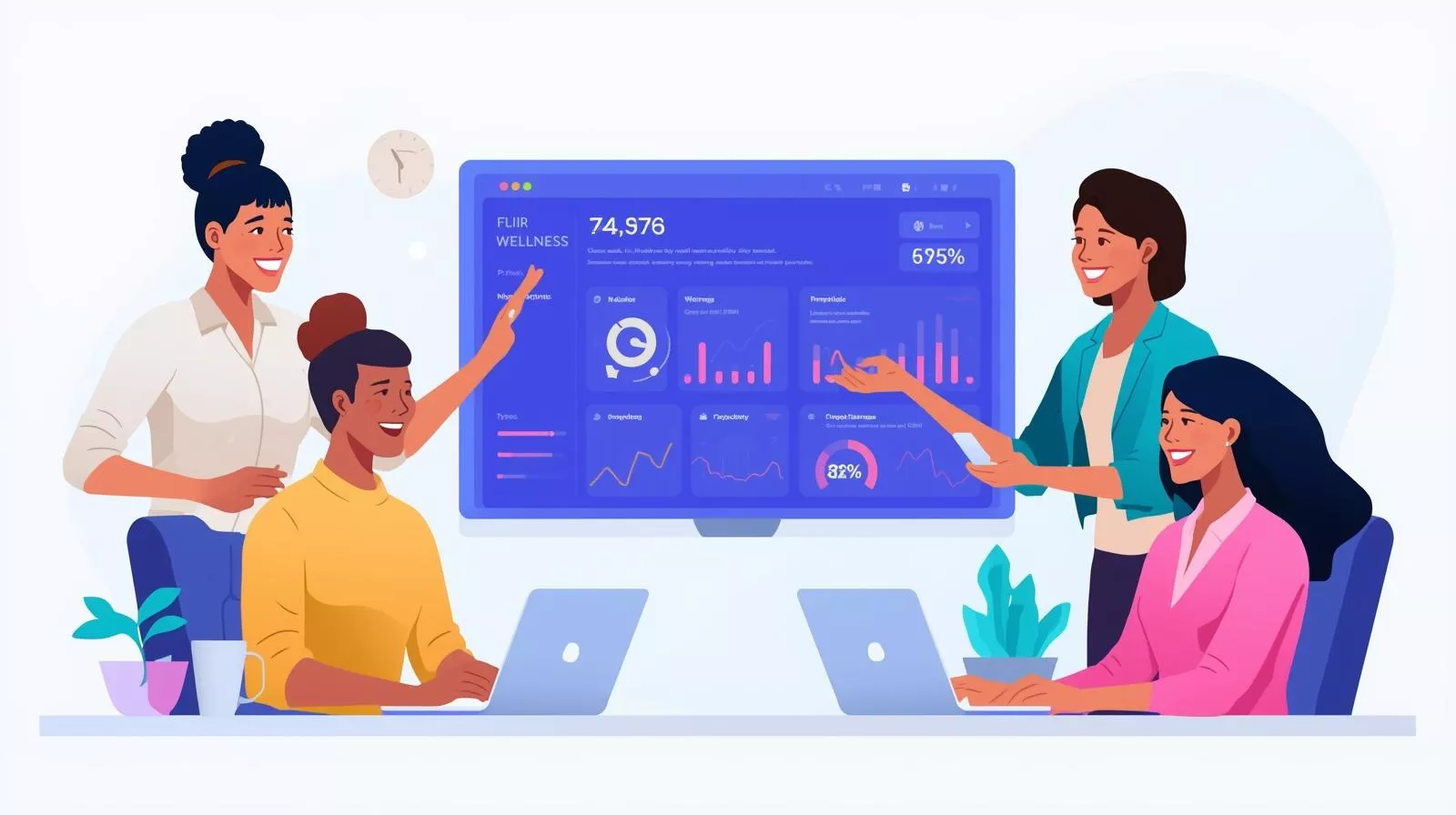
Stay in the loop
Get the latest news, feature updates, and exclusive promotions.

Discover how digital agencies and small teams thrive with a holistic lifestyle. Reduce burnout, improve focus, and track wellness with Siddhify.

Many digital agencies and small teams offer wellness perks like free snacks, meditation apps, or casual Fridays. While these perks are nice, they often don’t prevent burnout or truly improve productivity.
What really makes a difference is adopting a holistic lifestyle. This approach supports whole-person health, encourages focus time, and balances work with personal life.
In this guide, we’ll explain what a holistic lifestyle is, why it matters for small teams, and how to put it into practice.
You’ll also see how tools like Siddhify can bring together wellness programs, task planning, and family management in one system. This helps teams build healthy habits, reduce stress, and improve performance.
Research shows that many corporate wellness programs fail because they only focus on perks, not on designing jobs that truly support people. This proves that a system-backed, holistic approach is better for agencies that want to thrive.
A holistic lifestyle is more than exercise, healthy eating, or stress reduction.
According to the National Center for Complementary and Integrative Health (NCCIH), it looks at whole-person health, including physical, mental, social, emotional, and spiritual well-being.
Traditional wellness programs often target just one behavior. Holistic wellness looks at the whole person. It aligns daily habits, workplace culture, and personal priorities.
NCCIH: “Whole-person health is about looking at the big picture of health, not just treating disease.”
For agencies, this approach lowers burnout, boosts engagement, and improves performance by balancing work and life in a sustainable way.
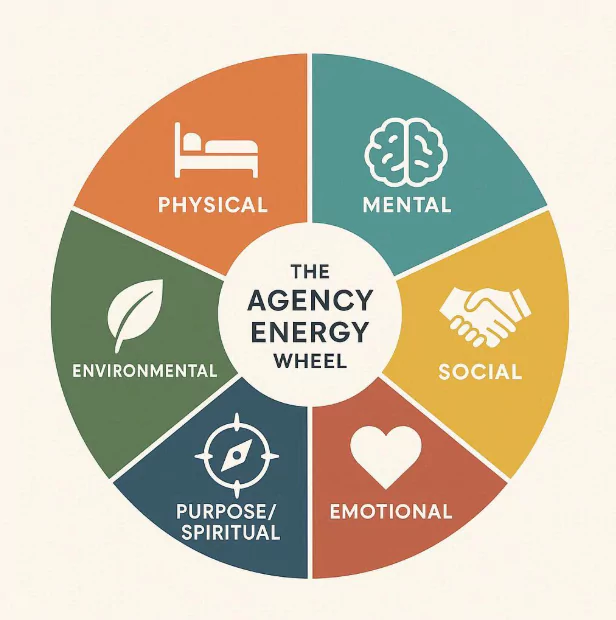
Holistic living includes six key areas:
Agencies can visualize this as “The Agency Energy Wheel”, helping teams see where their energy is balanced or lacking.
Small teams often face higher burnout risks due to tight deadlines, frequent client requests, and async collaboration challenges.
Common problems include:
By adopting a holistic lifestyle, teams can stay productive while protecting their overall well-being.
Optimizing physical energy starts with sleep, movement, and recovery. These factors directly affect productivity.
Case Example: Johnson & Johnson’s “Culture of Health” returned $2.71 for every $1 spent (HBR).
McKinsey Health Institute: “Sleep and recovery are direct performance drivers for knowledge workers.”
Small agencies can apply this by using standing desks, movement breaks, or personalized wellness reminders through Siddhify.
Mental energy depends on focus and clarity. Teams can improve it by:
These steps help employees prioritize important work without constant interruptions.
Psychological safety and team rituals strengthen emotional energy. Good practices include:
Gallup data shows that highly engaged teams have better retention and productivity. Agencies can track engagement using surveys or visual scorecards.
Linking work to meaningful goals increases purpose energy. Combine this with meeting hygiene and async workflows to save hours.
Ashley Whillans (HBR): “Time is the currency of well-being, and organizations can design jobs to give people more of it.”
Agencies can align personal goals with company purpose while limiting unnecessary meetings. This gives teams more clarity and control.
It focuses on whole-person health, including physical, mental, social, emotional, purpose, and environmental dimensions.
It lowers burnout, improves focus, strengthens engagement, and links work to meaningful goals.
Yes. Structured focus blocks and fewer interruptions increase creativity and output.
Async collaboration apps and wellness-integrated systems like Siddhify help balance work and personal priorities.
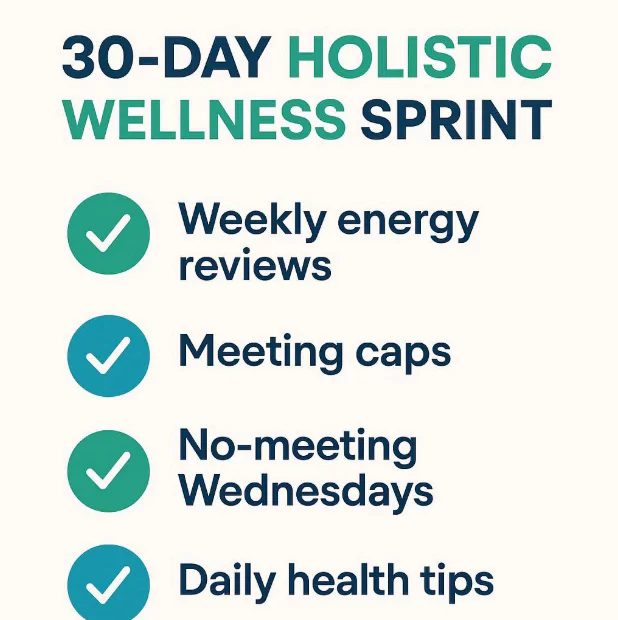
A short, practical program builds quick momentum:
Longer pilots give measurable results:
Case Study: South Cambridgeshire Council saw a 39% lower turnover after 15 months (The Guardian).
KPIs should track health and performance:
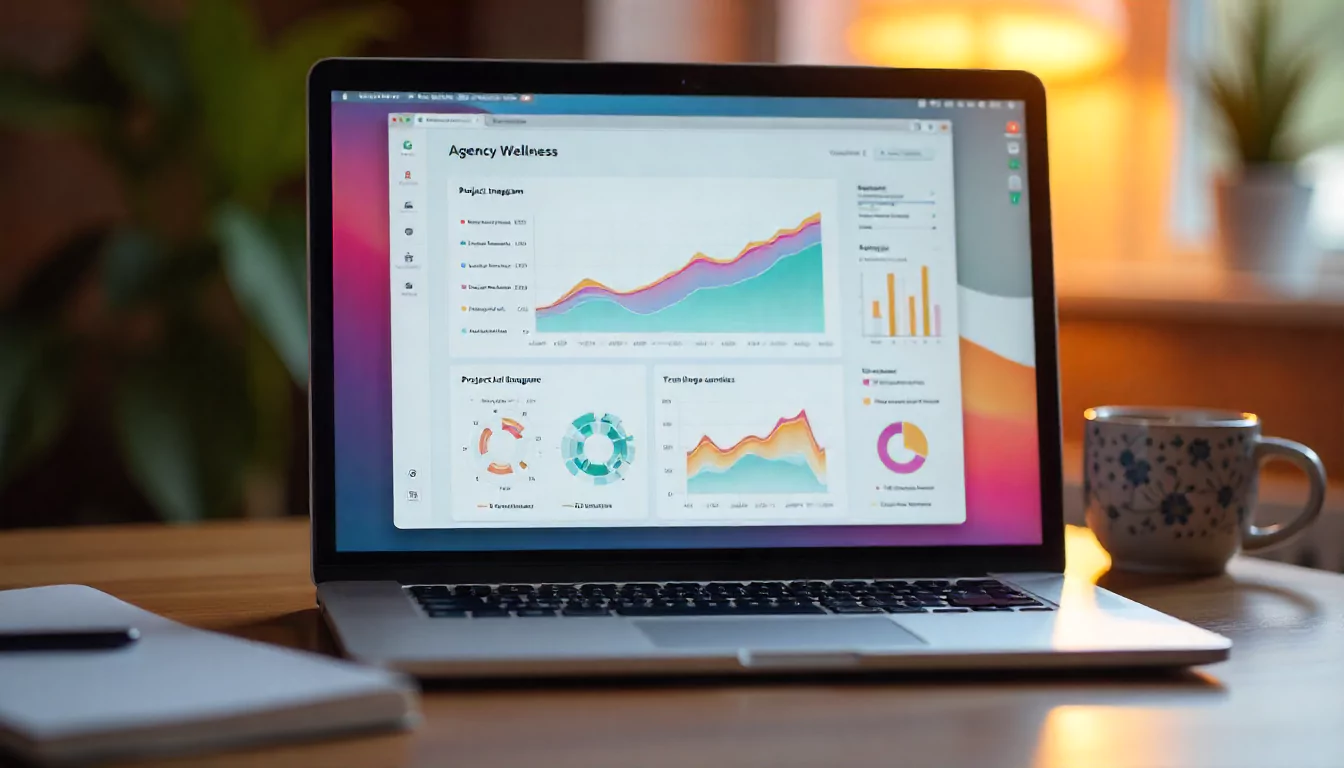
Agencies can use a Wellness Dashboard to visualize these metrics.
Validated by NIH, McKinsey, and HBR.
Cleveland Clinic: “Always vet holistic practitioners and programs to ensure credibility and safety.”
Leaders should know who provides holistic investment and lifestyle planning. Checklist:
Metric | Traditional Work Model | Holistic Pilot Model |
Burnout | High | Reduced 71% |
Retention | Moderate | Improved 39% |
Productivity | Moderate | Maintained/Increased |
Sick Days | Baseline | Reduced |
Employee Engagement | Baseline | Higher |
Siddhify can combine work management, wellness, and family priorities in one system.
It integrates physical, mental, social, emotional, purpose, and environmental well-being into daily work and life.
Six dimensions: Physical, Mental, Social, Emotional, Purpose/Spiritual, and Environmental.
Start with 30-day sprints, schedule focus time, and use async-first workflows.
Yes. NIH, HBR, and McKinsey studies validate sleep, recovery, psychological safety, and structured workflows.
Yes. Research shows that it lowers burnout while maintaining or even increasing productivity.
KPIs include retention, sick days, utilization, creative output, and engagement scores.
A holistic lifestyle goes beyond perks. It makes wellness part of how teams work.
Start with 30-day sprints, track clear KPIs, and expand gradually. Studies show it lowers burnout, improves retention, and boosts productivity.
Tools like Siddhify align focus time, wellness, and family priorities in one system. This helps agencies build healthier, more productive teams without disrupting work.
By combining team-focused holism, proven practices, and practical playbooks, agencies can lead in both performance and employee well-being, achieving long-term success.

Holistic Lifestyle: How Digital Agencies & Small Teams Can Thrive with Whole-Person Health
Join thousands of entrepreneurs and professionals managing their work and life in one place — with the motivational power of gamification built right in.
⚡ Try Siddhify Free TodayNo credit card required · Set up in minutes