Stay in the loop
Get the latest news, feature updates, and exclusive promotions.

Discover 10 science-backed strategies to stay motivated at work, beat burnout, and boost engagement — with quick actions managers and teams can use today.

On Monday morning, Ana opened her inbox and froze — a mountain of tasks and no clear next step. Does this sound familiar? This article gives you 10 science-backed, practical strategies you can use today to reclaim focus, beat burnout, and stay motivated at work.
We keep the steps short, practical, and easy to try, promoting self-discipline in applying them consistently. Tools like Siddhify can help you align daily tasks with personal and team priorities, making it easier to follow these strategies. Read on for quick actions, a simple framework (P.A.C.E.), and a few mini case studies you can copy for your team.
Work motivation is the combination of inner drives and external rewards that motivates people to perform their jobs and achieve goals. It is the fuel behind productivity, job satisfaction, and team performance. According to Gallup, motivated employees are about 17% more productive than disengaged employees (Gallup).
Balancing both helps managers build policies that keep teams engaged and reduce turnover.
Understanding these models enables leaders to design practical steps for their teams.
Below are ten strategies to boost your enthusiasm. Each entry includes a short explanation and a Quick action you can try this week.
Use this mini-framework each morning to turn strategy into practice:
How to use: Apply one P.A.C.E. step to your top task each morning.
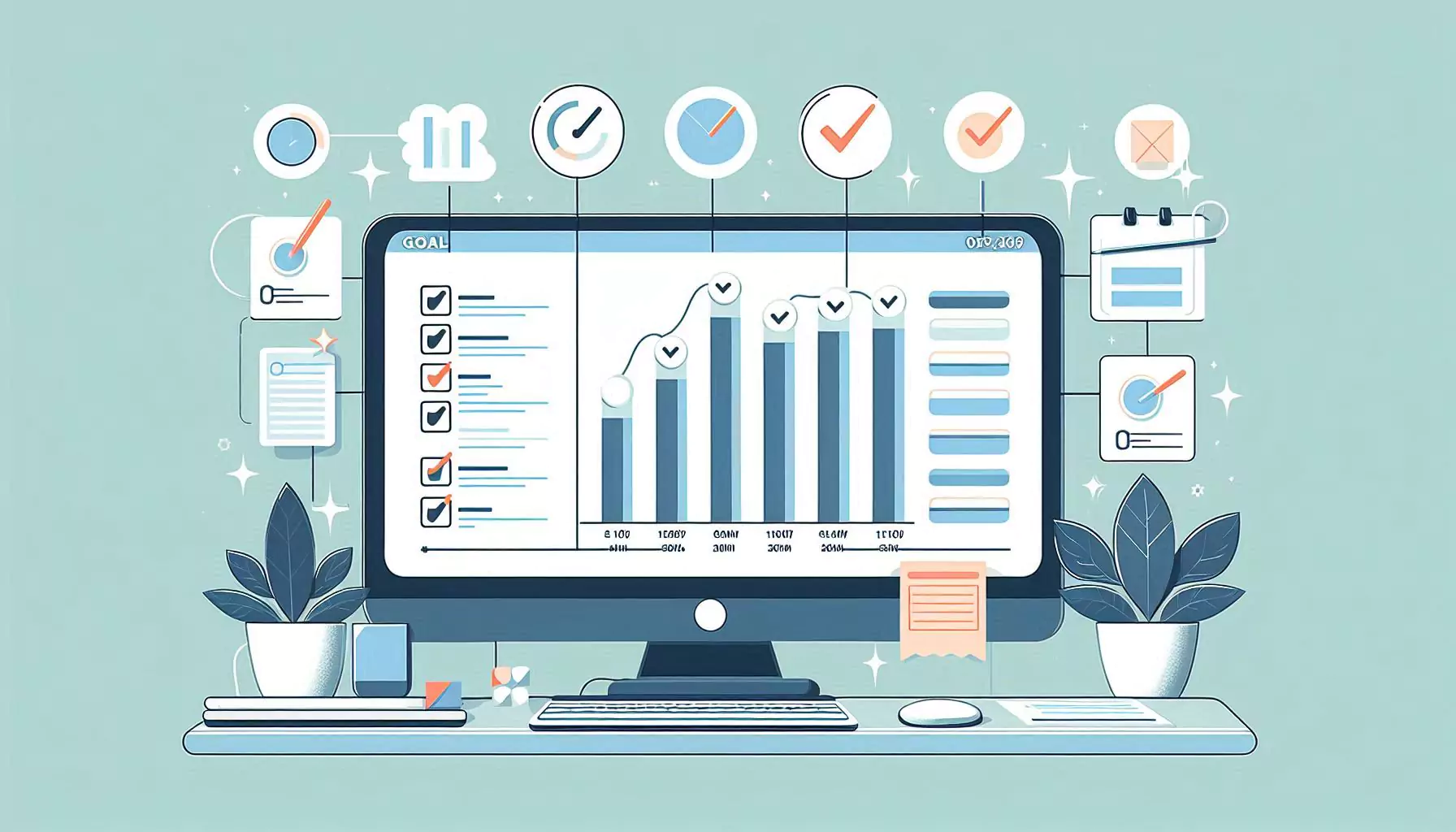
Create 3 SMART goals for the week. Clear goals reduce decision fatigue and give a path forward.
Quick action: Spend 10 minutes on Monday listing your top 3 SMART goals.
Tool tip: Tools like Siddhify can help you align work and personal priorities.
Combine small public recognition with growth opportunities to foster personal development. Recognition feels immediate; learning builds long-term drive.
Example: Salesforce’s recognition rituals include monthly shout-outs and peer awards. Try a 30-day recognition sprint where each team member praises one peer weekly.
Quick action: Start a 2-minute recognition ritual at the end of team standups.
A supportive workplace that prioritizes mental health raises engagement. Simple rituals and clear feedback go a long way.
Best practices:
Quick action: Run a 5-minute round of wins at your next team meeting.
Give people control over how they do work and help them see how it connects to the company’s mission. Small choices amplify ownership.
Example: Google’s “20% time” lets teams spend time on passion projects; Gmail grew from that freedom. Try a 1-day experiment where a team spends a sprint day on a chosen idea.
Quick action: Allow one team member to pick the sprint goal for a week.
Learning keeps work interesting and signals that the company invests in people.
Quick action: Offer one short online course or a 30-minute lunch-and-learn this month.
Strong relationships at work, fueled by positivity, make people enjoy their jobs more.
Encourage:
Quick action: Schedule a 15-minute non-work social check-in this Friday.
Give feedback that is specific, timely, and tied to behavior. Praise the process as well as the result.
Quick action: Use the “What, impact, next step” formula for your next piece of feedback.

Set boundaries and protect focused time, as these practices are essential for maintaining mental well-being. Short breaks and clear priorities help sustain energy.
Quick action: Block two 60–90 minute focus sessions this week and mark them as do-not-disturb.
Design tasks to produce frequent micro-wins. Small, regular rewards increase intrinsic motivation and momentum.
Quick action: Break a larger task into 20–30 minute micro-tasks and complete one during your first focus block.
When people see how their work matches their values, they work with more passion.
Example: Patagonia’s environmental mission attracts employees who care about the same cause. Align projects to values where possible.
Quick action: Ask each team member to write a one-line why for their work this quarter.
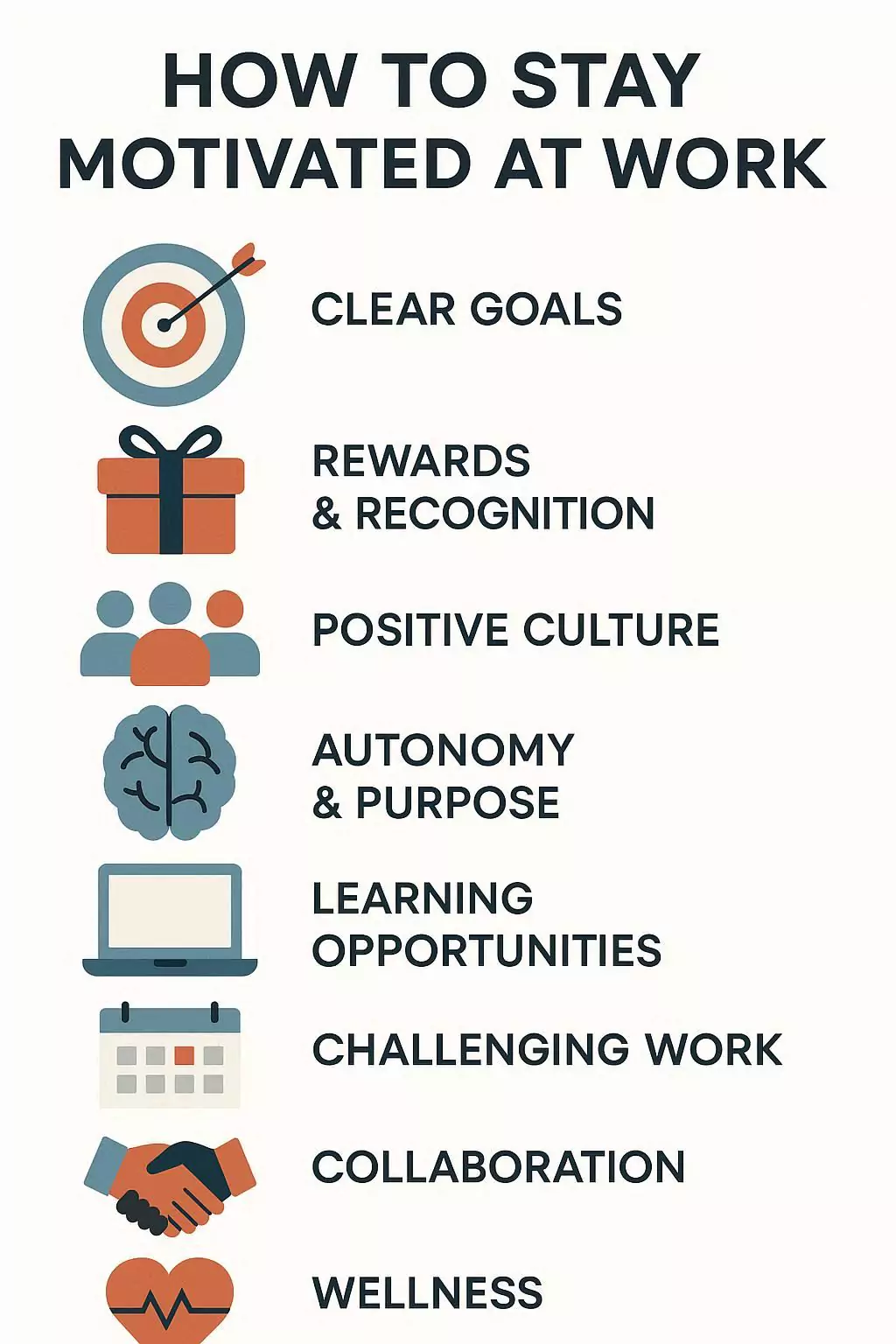
If you want one small step for each strategy, try this list:
Salesforce created simple recognition rituals and peer-award programs that make appreciation visible. The trick is consistency: short, frequent acts of recognition beat rare, big awards. Try a weekly digital shout-out board where peers add 1–2 lines of appreciation.
Giving teams small pockets of freedom – choice-over-focus time – leads to creative outcomes. A focused, time-limited experiment (one day or one sprint) can test whether this approach works for your team
When company goals and employee values match, engagement improves naturally. Try aligning one project this quarter to an explicit company value and measure team sentiment after completion.
Short, routine coaching conversations help people grow. Focus on small skills and quick feedback instead of long annual reviews.
Quick action: Schedule 20-minute monthly coaching touchpoints for direct reports.
KPIs to track:
Sample 3-question pulse (weekly or biweekly):
Review trends over 8–12 weeks rather than reacting to individual scores.

Customize recognition to make it meaningful. Small, frequent rewards and peer recognition often work better than large, rare awards.
Create safe ways to experiment – small trials where teams pick the work and measure results.
Flexible schedules and predictable routines help sustain motivation. Encourage boundaries and micro-rests during the day.
Use the answers to pick one of the quick actions above.
Staying motivated at work takes small, consistent steps: clear goals, regular recognition, autonomy, and attention to workload and values. Use the P.A.C.E. framework and the quick actions above to build momentum this week.
Explore how Siddhify can help align team priorities with personal well-being and make these practices easier to scale.
A: Intrinsic motivation comes from personal satisfaction and purpose, while extrinsic motivation is influenced by rewards like salary, recognition, or promotions.
A: Identify root causes—stress, unclear goals, or misalignment—and use strategies like goal setting, regular breaks, recognition, and tools like Siddhify to stay organized.
A: A combination of intrinsic and extrinsic motivators, including autonomy, learning opportunities, recognition, collaboration, and meaningful projects.
A: A positive culture emphasizing recognition, collaboration, autonomy, and wellness boosts engagement, productivity, and overall motivation.
A: Yes. Transformational and servant leadership styles inspire, support, and empower employees, enhancing intrinsic motivation and engagement.

10 Effective Strategies on How to Stay Motivated at Work
Join thousands of entrepreneurs and professionals managing their work and life in one place — with the motivational power of gamification built right in.
⚡ Try Siddhify Free TodayNo credit card required · Set up in minutes