Stay in the loop
Get the latest news, feature updates, and exclusive promotions.
Explore Agile, Waterfall, Six Sigma, and more. Learn how to pick the best project management methodologies for your team in 2025.
Every project has its own unique DNA. The people, goals, resources, and timeline all shape how work gets done.
But one thing is certain: choosing the wrong project management methodology can lead to missed deadlines, wasted budgets, and unhappy clients.
In 2025, things move fast, and tools and challenges are always changing. That’s why it’s more important than ever to pick the right method for your team.
Whether you’re leading a software team, building a new office, or improving how your company works, this guide will walk you through 7 of the most popular project management methodologies. We’ll explain when to use each one, compare them side by side, and give real-life examples.
You’ll also get insights on Agile’s growing influence, why Six Sigma still sparks debates, and how CCPM is gaining momentum in high-stakes industries.
Let’s break them down in a simple way, so you can choose what fits your team best.
A project management methodology is a system that helps teams plan, do, and finish projects the right way. It gives structure and helps everyone stay on track.
It helps teams:
By following a method, teams know what to do next and what success looks like. This cuts down on confusion and keeps everyone moving forward.
Term | What It Means | Example |
Methodology | Full set of rules and steps | Waterfall, CCPM |
Framework | Flexible structure or guide | Scrum, Kanban |
Approach | Overall way of thinking | Agile, Lean |
These differences may seem small, but they matter. For example, Agile is a broad approach, while Scrum is a framework that fits within Agile. Waterfall, on the other hand, is a strict methodology.
Knowing the difference helps you avoid mixing things up and picking the wrong tool for the job.
Project management is evolving. In 2025, the biggest trends include:
These trends are changing how teams choose methodologies. Staying up to date helps you stay competitive.
Methodology | Best For | Flexibility | Team Size | Risk Level | Client Visibility |
Agile | Software, Creative Projects | High | Small–Medium | Medium | High |
Waterfall | Construction, Legal, Compliance | Low | Medium–Large | Low | Low |
Scrum | Agile with structure | Medium | Small–Medium | Medium | High |
Kanban | Ongoing, Visual Tasks | High | Any size | Medium | Medium |
CPM | Complex task dependencies | Low | Medium–Large | Medium | Medium |
CCPM | Resource-constrained teams | Medium | Medium | High | Medium |
Six Sigma | High-precision industries | Low | Medium–Large | Low | Low |
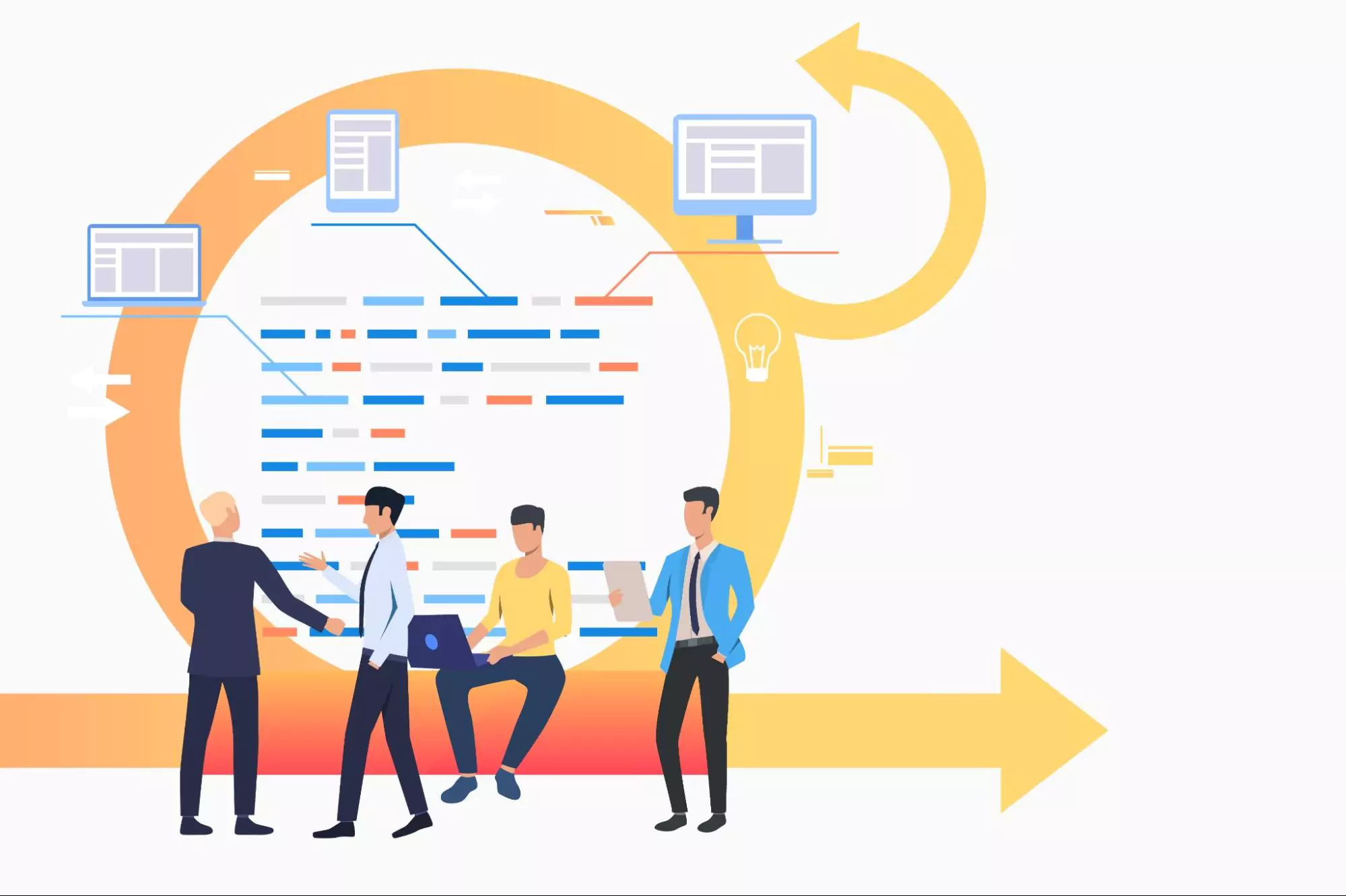
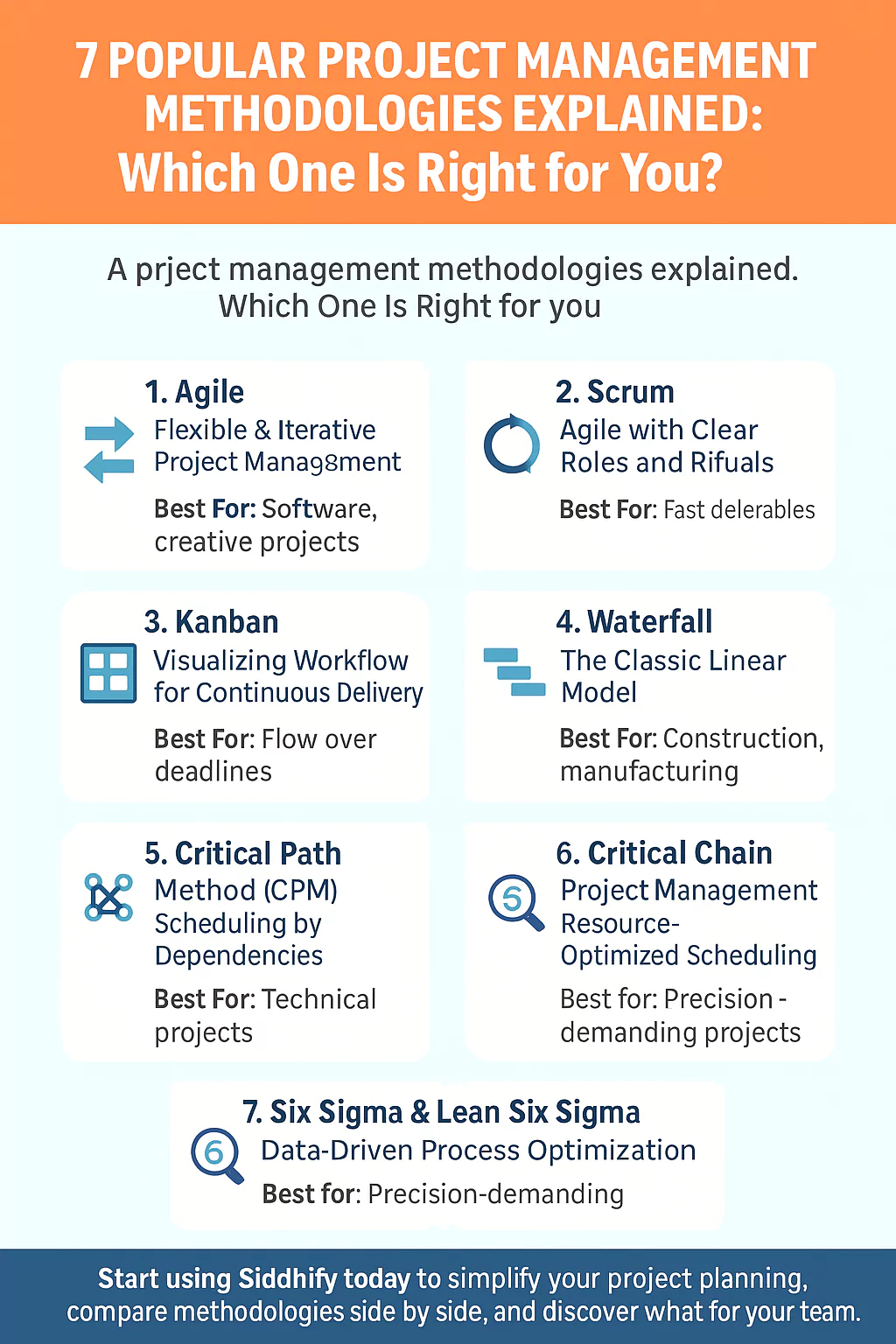
Flexible & Iterative Project Management: Agile is about staying flexible and making changes as needed. It started in software but now works in marketing, education, and more.
Best For:
Pros:
Cons:
Hot Take: Agile isn’t a strict methodology; it’s more of a mindset. Some experts say calling it one is a mistake.
Real Example: Atlassian uses Agile to build tools with user feedback and collaboration.
Agile with Clear Roles and Rituals: Scrum is Agile with structure. It has roles like Scrum Master and uses short work cycles called sprints.
Best For:
Pros:
Cons:
Quote to Remember: “Scrum is like your mother-in-law, it points out your shortcomings.” —Ken Schwaber
Real Example: Spotify organizes tech teams into squads using Scrum.
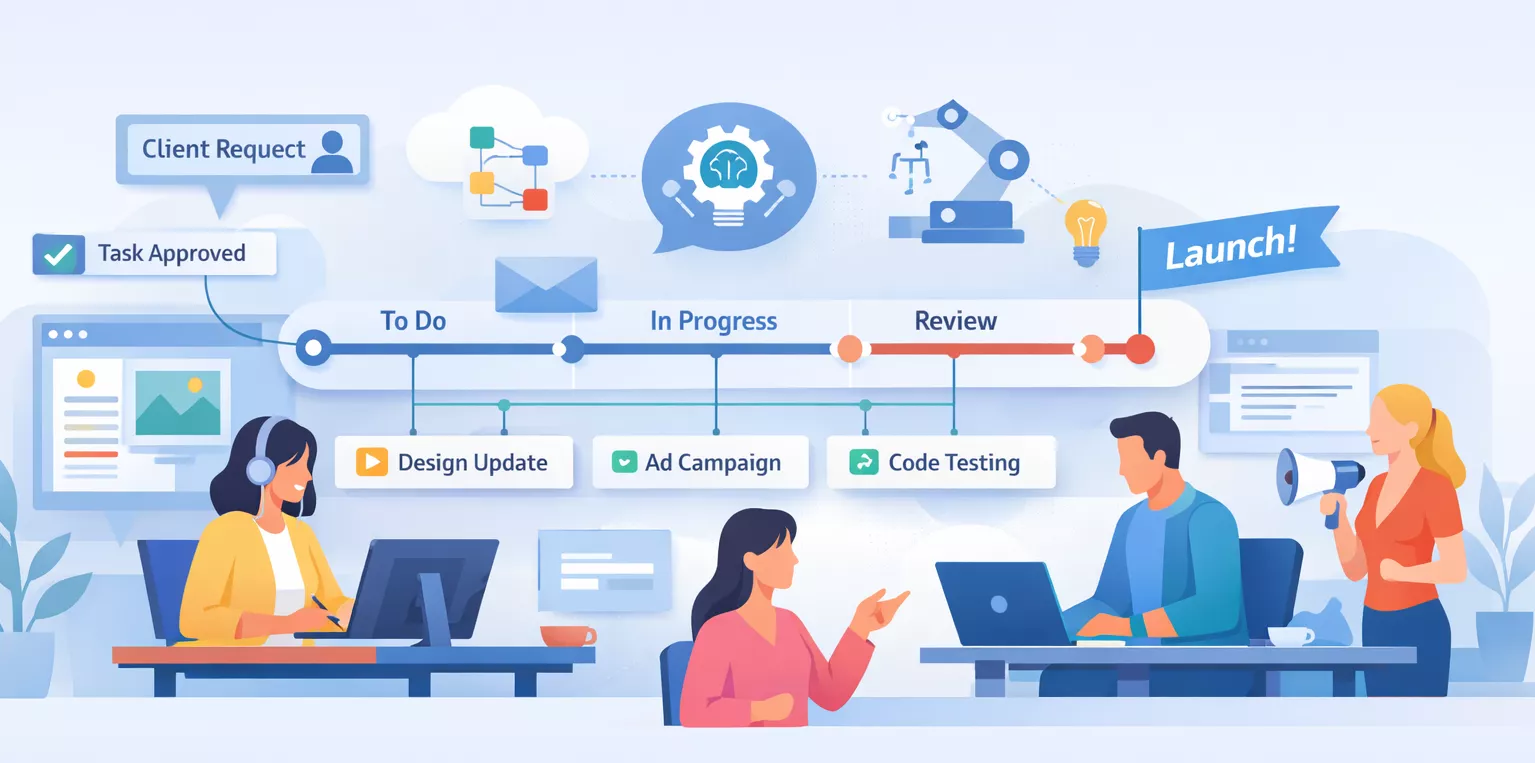
Visualizing Workflow for Continuous Delivery: Kanban uses boards with columns like “To Do,” “In Progress,” and “Done.” It’s easy to see where work stands.
Best For:
Pros:
Cons:
Case Study: UseMotion boosted team productivity with Kanban.
Kanban vs Scrum: Kanban is flow-based. Scrum is time-boxed. You can even combine them.
The Classic Linear Model: Waterfall is a step-by-step approach. You finish one phase before starting the next.
Best For:
Pros:
Cons:
Use Case: Construction firms use Waterfall when every step must be approved before moving forward.
Scheduling by Dependencies: CPM shows which tasks are most important. Delay them, and the whole project is delayed.
Best For:
Pros:
Cons:
Fun Fact: CPM was used in the Manhattan Project.
Resource-Optimized Scheduling: CCPM is like CPM but smarter. It adds buffers for the unexpected and manages resource limits.
Best For:
Pros:
Cons:
Example: Pharma companies use CCPM to avoid delays in clinical trials.
Why Siddhify Recommends CCPM: It’s great for teams with limited people or tools. It cuts the chaos and helps deliver faster.
Data-Driven Process Optimization: Six Sigma uses numbers to reduce errors. Lean Six Sigma adds speed by cutting waste.
Best For:
Pros:
Cons:
Why Is Six Sigma Controversial? It works great with numbers, but not every project is all about data.
Case Study: GE saved over $1 billion using Six Sigma.
Your answers will help you match with the right method, Agile, Waterfall, CCPM, or something in between.
Pro Tip from Siddhify: Use hybrid models like Scrumban or mix Waterfall and Agile. Siddhify lets you compare, plan, and track what’s working for your team.
These may not be the top 7, but they’re powerful when used right.
Agile methods like Scrum or Kanban work great remotely; they support asynchronous work and clear updates.
CPM focuses on task order. CCPM adds buffers and thinks about people and resources.
It’s super precise but not flexible. That can be a problem in creative work.
Yes. Hybrids like Scrumban or Agile-Waterfall blends are common now.
Yes. It’s used in education, marketing, and more with great results.
No two projects or teams are the same. There’s no perfect method for everyone.
But when you understand each methodology, you can choose smarter and move faster.
Whether it’s Agile for your agency, CPM for engineering, or CCPM with Siddhify, know you’re making an informed choice.
Start using Siddhify today to simplify your project planning, compare methods side-by-side, and discover what works best.
Because in 2025, smarter project management = sustainable growth.
If you’re serious about finding the right project management methodology, you’re probably also thinking about how to plan better, choose the right tools, or manage projects in your industry. Here are some helpful reads to keep your momentum going:

7 Popular Project Management Methodologies Explained: Which One Is Right for You?
Join thousands of entrepreneurs and professionals managing their work and life in one place — with the motivational power of gamification built right in.
⚡ Try Siddhify Free TodayNo credit card required · Set up in minutes