Stay in the loop
Get the latest news, feature updates, and exclusive promotions.

Discover how to choose, implement, and scale daily planner apps tailored for digital & web agencies. Boost productivity with AI and seamless integrations.

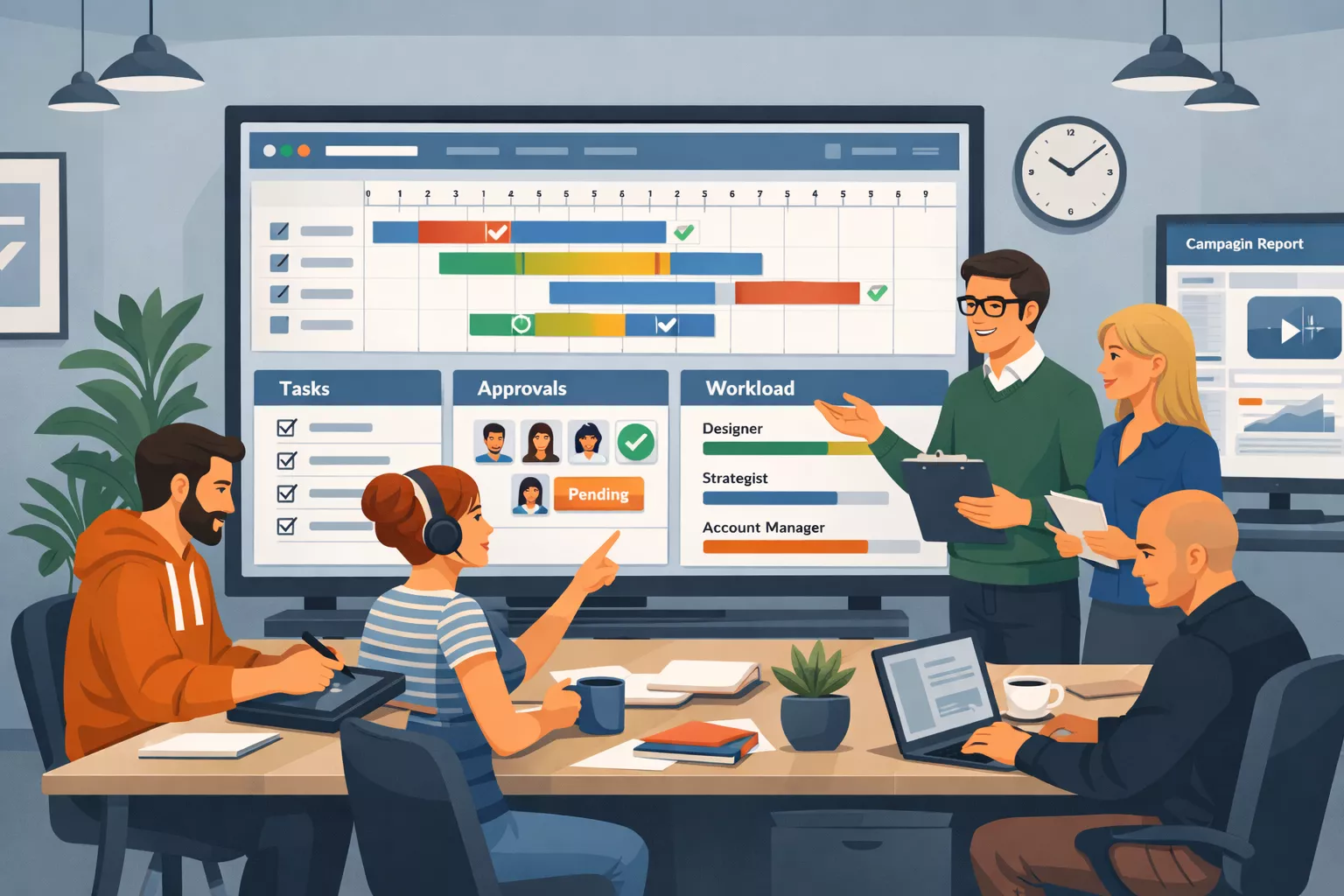
Agencies manage dozens of client deadlines, internal projects, and team priorities, often all in the same day. Without a smart daily planner app for digital and web agencies, it’s easy for context-switching, missed deadlines, and unclear priorities to derail productivity and impact your bottom line.
In this comprehensive guide, we’ll explore the best daily planner apps for agencies in 2025, how to integrate them into your workflow, and a step-by-step agency playbook to measure and maximize ROI. You’ll discover real case studies, get practical rollout templates, and learn how tools like Siddhify help you plan your day without drowning in admin work.
The nature of agency work has changed dramatically with the rise of remote and hybrid models, increased client demands, and complex project pipelines. According to a 2023 McKinsey report on hybrid work, hybrid work has become the norm, permanently shifting office attendance patterns.
“In today’s hybrid environment, digital agencies must adopt tools that enhance visibility and coordination across asynchronous teams,” says Sarah Johnson, CEO of AgencyFlow, a productivity consultancy for agencies.
For digital and web agencies, a well-structured agency productivity planner is critical to staying competitive and delivering high-quality results on time.
With teams spread across time zones or working staggered hours, synchronous meetings can’t cover all coordination needs. This calls for effective asynchronous collaboration tools centered around a daily planner app that ensures everyone is aligned, no matter their schedule.
Because hybrid work demands clear visibility into daily priorities across dispersed teams, a daily planner app helps manage time effectively and reduces friction from misaligned schedules, according to the McKinsey hybrid work survey.
Digital agencies typically juggle several clients and projects simultaneously. Switching between client work, design, development sprints, and account management tasks can sap focus. A study from the University of California found that it takes an average of 23 minutes and 15 seconds to refocus after an interruption.
A structured daily planning for agencies approach helps break down overwhelming workloads into manageable, prioritized tasks, minimizing context-switching.
Structured daily planning is more than just good practice; it delivers measurable ROI. Microsoft’s Copilot AI scheduling trials showed an average saving of 26 minutes per day per user, which translates into significant productivity gains for agencies managing multiple projects.
KPI | Before Structured Planning | After AI-Assisted Planning | Improvement |
Average Daily Task Completion | 6 tasks | 8 tasks | +33% |
Missed Deadlines (%) | 18% | 5% | -72% |
Billable Hours (%) | 65% | 75% | +15% |
“AI-powered daily planners have transformed how we allocate time, freeing up bandwidth for creative and client-facing work,” says Michael Lee, CTO of BrightWeb Agency.
Tools like Siddhify leverage AI to maximize your daily planning ROI, helping agencies spend more time on value-generating work and less on managing schedules.

The best planners do more than list tasks; they support agency workflows, roles, and security needs with precision.
The foundation of any effective daily planner is seamless synchronization between calendars and task management. With Calendly holding about 26% of the global scheduling market share (Statista, 2024), calendar integration is non-negotiable.
Your planner must sync bi-directionally with popular calendars (Google, Outlook) and task platforms (Asana, Jira), preventing double bookings or missed deadlines.
Because agency roles vary widely, planners should offer customizable views tailored to:
This specificity reduces cognitive overload and improves clarity.
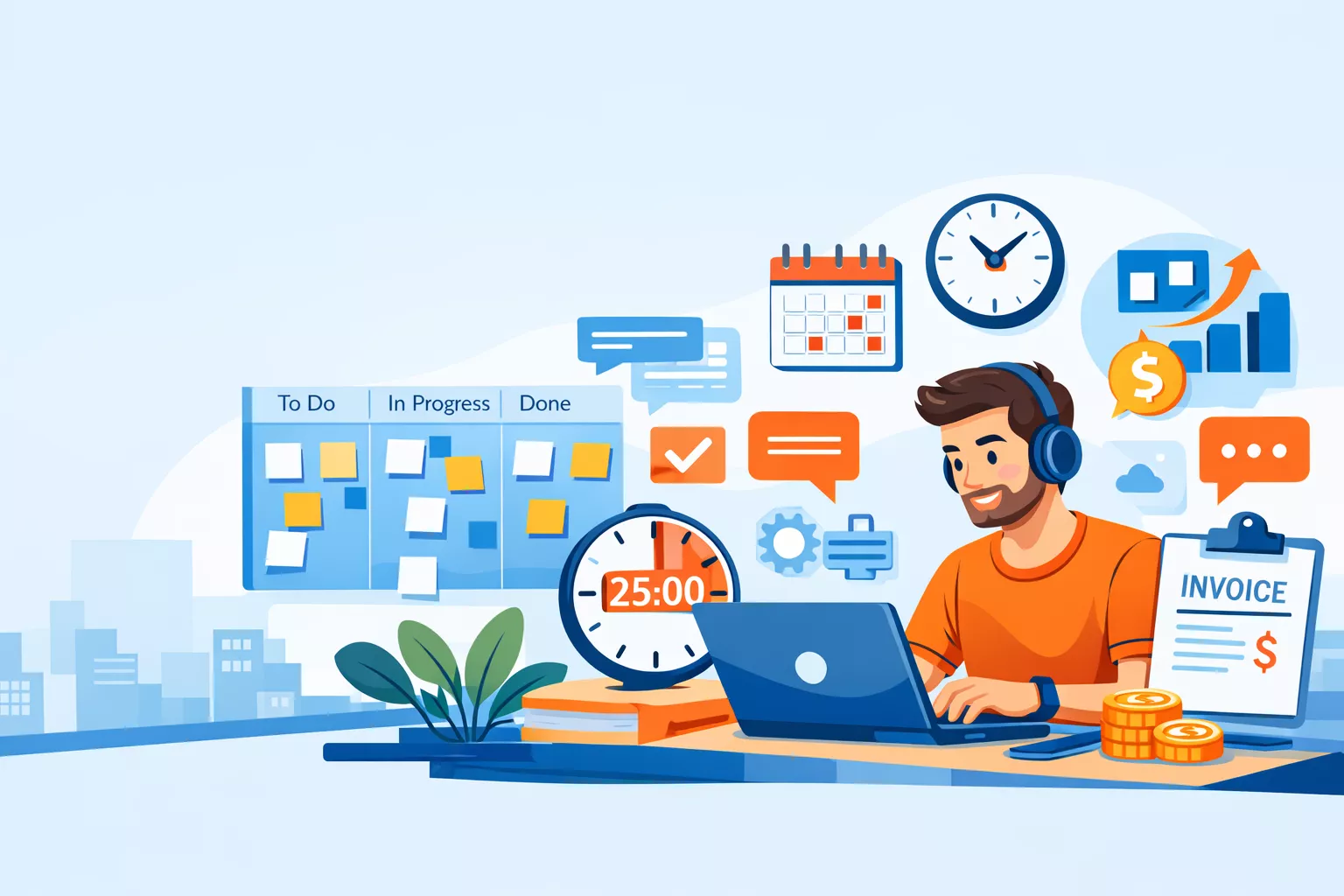
Can daily planners integrate with time tracking/invoicing? Absolutely. Tools like Siddhify enable workflows linking scheduling with QuickBooks (invoicing), eliminating manual data entry and improving billing accuracy.
Agencies must safeguard client data. Look for planners offering:
This ensures trust and legal compliance.
Below is a detailed comparison of the best daily planner apps 2025 for agencies, considering features, AI capabilities, workflows, and security.
App | Focus | Key Features | Pricing Range | Best For |
Motion | AI-First Planner | AI scheduling, deep work, timeline view | $12–$25/user/month | Teams needing automation |
Sunsama | Routine-First Planner | Daily rituals, task batching, integrations | $20/user/month | Agencies focusing on flow |
Structured.app | Timeline-First Planner | Visual timeline, task & calendar sync | Free–$12/month | Visual planners |
Akiflow | Task + Calendar Focus | Fast capture, integrations, shortcuts | $15–$25/month | Power users |
Google Calendar + Extensions | Calendar-First Planner | Free calendar, extensible via add-ons | Free | Cost-conscious teams |
Siddhify | AI + Agency-Centric | AI scheduling, client priority views, automations | $15–$30/user/month | Agencies wanting all-in-one |
Google Calendar is widely used and trusted, enhanced by add-ons like Calendly and Zapier. TechRadar (no follow) highlights these for teams prioritizing simplicity and calendar-centric workflows.
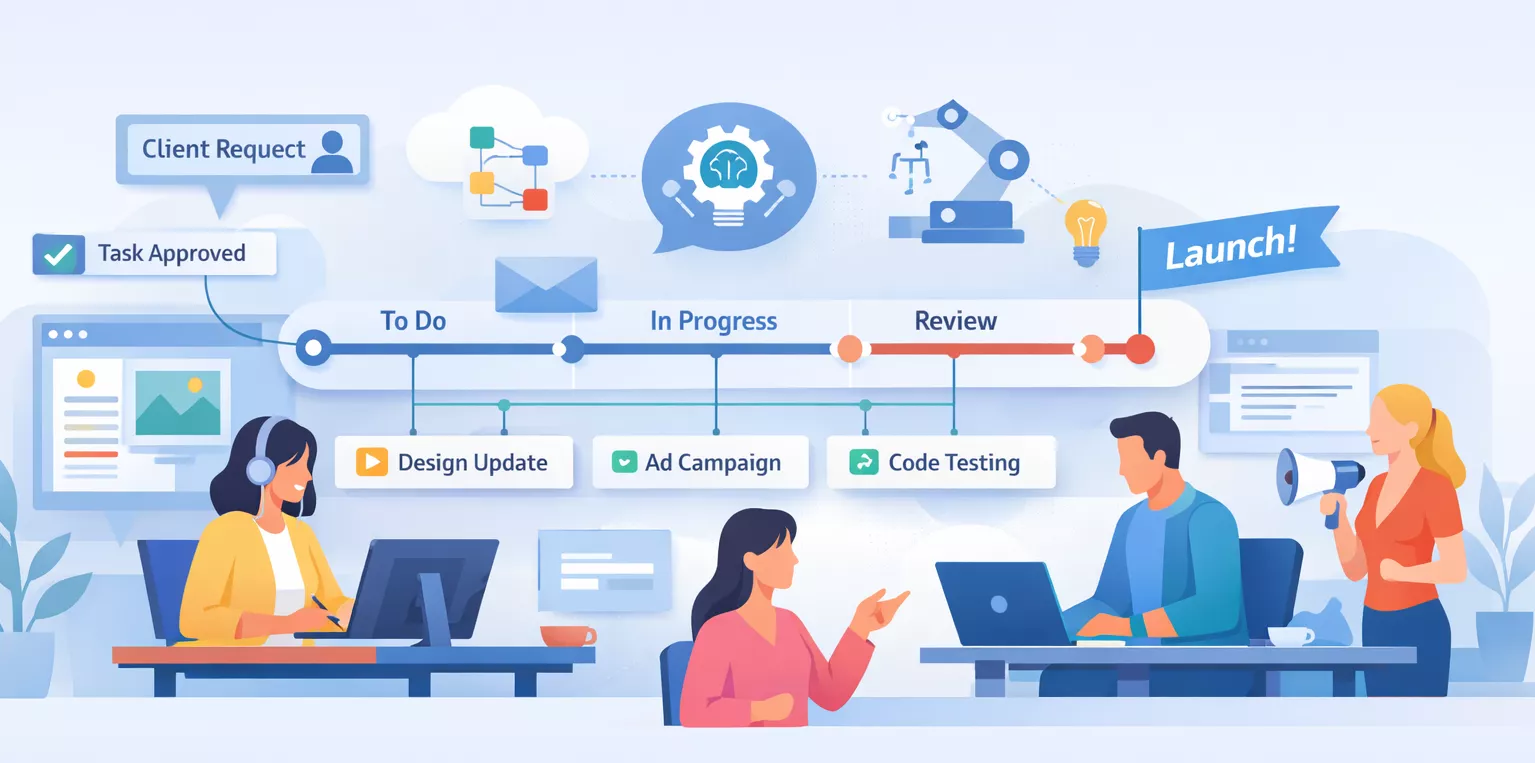
AI planners automate task prioritization and meeting scheduling, saving time and reducing cognitive load.
Ideal for visual thinkers preferring a Gantt-style timeline alongside calendars.
Centers around daily routines and task batching to improve focus and reduce overwhelm.
Great for small teams or solopreneurs looking for a no-cost start.
Hybrid work and multiple clients require clear scheduling and prioritization to maintain productivity and avoid missed deadlines.
Yes, many modern planners, including Siddhify, offer integrations with tools like Toggl and QuickBooks for seamless workflow automation.
Role-specific views, calendar-task sync, time blocking, AI scheduling, and strong security are key features.
Yes, tools like Trello with calendar sync or the free tier of Todoist can work well for small teams starting out.
Selecting the best planning apps requires evaluating based on features, budget, security, and role alignment.
Pricing may be seat-based (per user) or project-based. Consider what suits your agency’s scale and growth plans.
Choose planners with:
Match PMs, developers, designers, and account managers to planners offering views and features that fit their needs.
Criteria | Motion | Sunsama | Siddhify | Google Calendar | Trello |
AI Scheduling | Yes | No | Yes | No | No |
Role-Specific Views | Yes | Moderate | Yes | No | Moderate |
Integrations | Extensive | Good | Extensive | Via Add-ons | Good |
Security & Compliance | High | Moderate | High | High | Moderate |
Pricing Flexibility | Mid | Higher | Mid-High | Free | Free/Paid |

Phased implementation increases adoption success and minimizes disruption.
Begin with a pilot team using a simple Google Sheets daily planner template designed for agencies.
Add tools like Siddhify and Slack integrations to automate scheduling, tracking, and communication.
Automate workflows such as:
BrightWeb Agency increased billable hours by 15%, reduced scheduling conflicts by 30%, and improved employee satisfaction by leveraging Motion’s AI scheduler.
Creative studio Artify used Sunsama’s daily routine focus to reduce missed deadlines by 20% and enhance team collaboration.
A mid-sized agency orchestrated daily planning with Siddhify and QuickBooks, achieving:
KPI | Before Siddhify Setup | After Siddhify Setup | Change |
Billable Hours (%) | 68% | 76% | +12% |
Missed Deadlines (%) | 22% | 7% | -68% |
Admin Hours/Week | 20 | 10 | -50% |
Example:
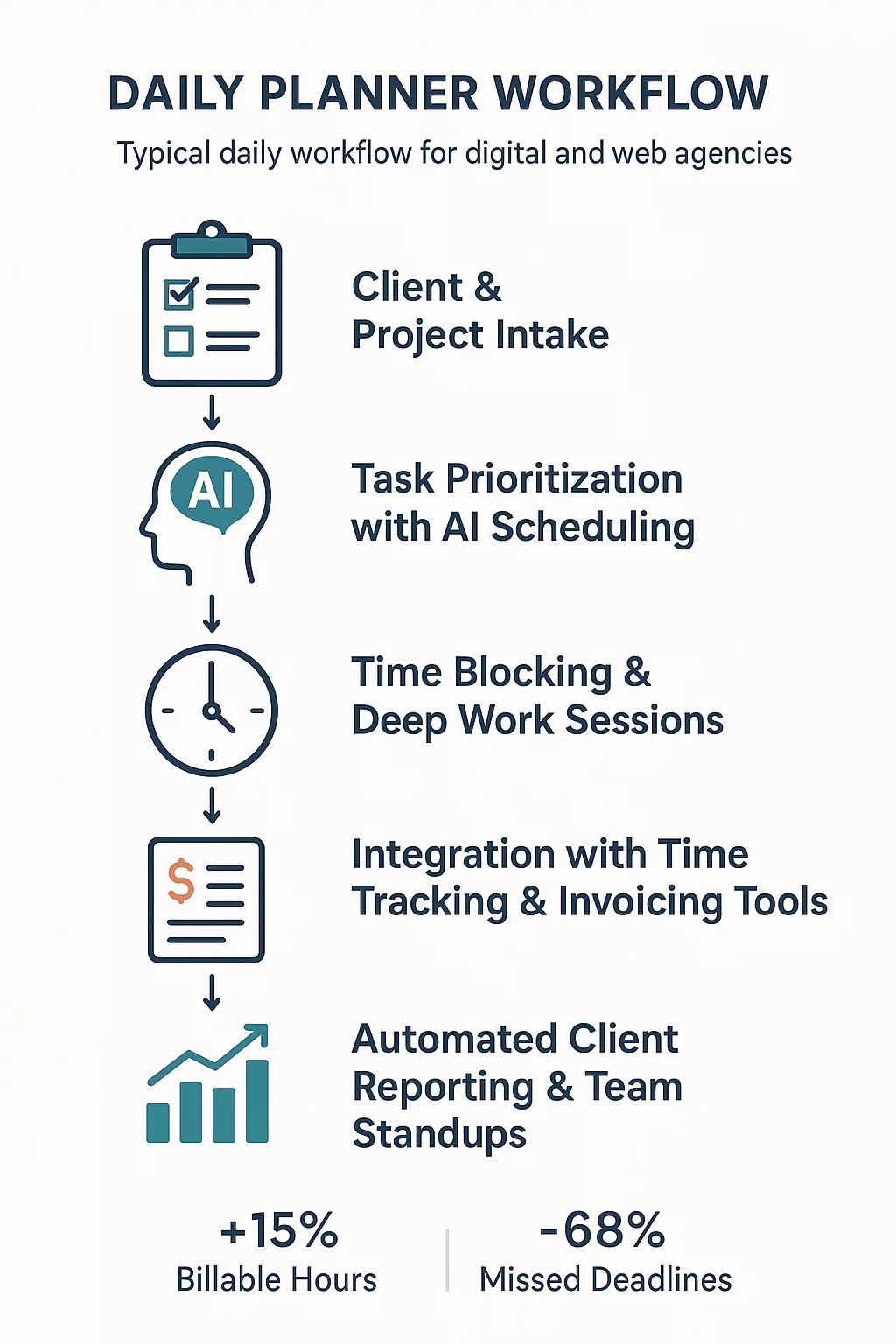
Schedules flow automatically into Siddhify for tracking, syncing with QuickBooks for seamless billing.
Generate client-ready reports from planner data, saving agency hours.
Daily task statuses automatically summarize into Slack, aligning remote teams efficiently.

Tracking productivity metrics informs ongoing optimization.
The percentage of billed hours versus total work hours.
Measures time spent in meetings relative to deep focus work.
Percentage of tasks/projects delivered by deadlines.
Visual bar charts showing billable utilization trends, line graphs for meeting-to-focus ratios, and gauges for on-time delivery.
Start with a simple pilot using a basic planner template. Gradually add integrations and expand usage across teams.
When combined with human oversight, AI scheduling like Siddhify’s significantly improves efficiency by optimizing task order and availability.
Track KPIs like billable hours, missed deadlines, and admin time saved before and after implementation.
Yes, the best tools offer customizable views and filters tailored to PMs, developers, designers, and account managers.
Choose planners with data encryption, role-based access controls, and compliance with GDPR or other relevant standards.
Choosing the right daily planner app for digital and web agencies is about more than ticking off tasks; it’s about creating a daily operating rhythm that protects deep work time, ensures on-time delivery, and keeps clients happy.
Start with a 30-day pilot, measure impact, and scale with automation. If you want a planner built with agencies in mind, Siddhify combines AI scheduling, client-priority views, and seamless integration into your toolchain.
Download our:

Daily Planner App for Digital & Web Agencies: How to Choose, Implement, and Scale Your Daily Planning Workflow
Join thousands of entrepreneurs and professionals managing their work and life in one place — with the motivational power of gamification built right in.
⚡ Try Siddhify Free TodayNo credit card required · Set up in minutes