
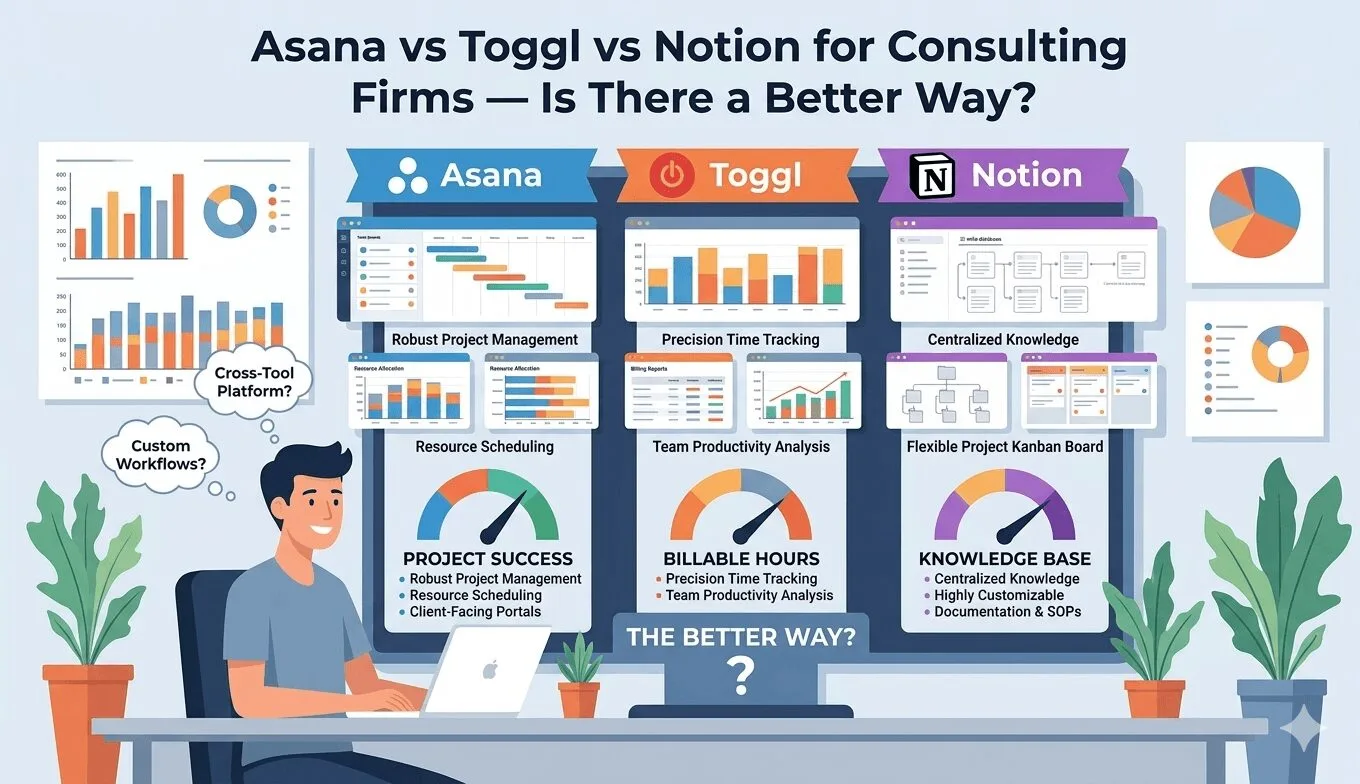

If you run a small consulting firm, freelance agency, or solopreneur practice, there's a good chance your tech stack looks something like this: Asana for projects, Toggl for time tracking, Notion for documentation. Maybe with FreshBooks or QuickBooks bolted on for billing. It works — until it doesn't. This article breaks down exactly what each tool does well, where the cracks appear when you use them together, and whether there's a smarter all-in-one alternative built specifically for consulting operations.
Why Consulting Firms End Up With Three Tools
It rarely starts as a deliberate choice. Most consulting firms add tools one at a time as problems appear:
- Client work gets complex → add Asana for project tracking
- Billing disputes arise → add Toggl for time evidence
- Knowledge gets lost → add Notion as a central wiki
Each tool solves a real problem in isolation. The trouble is that consulting operations don't happen in isolation. A single client engagement involves project tasks, tracked hours, documented processes, and an invoice — and when those four things live in four different places, you spend as much time managing the tools as you do serving the client.
The Fragmentation Tax
Every time you switch between tools to find the same piece of information, you pay a context-switching cost. Studies show it takes 23 minutes to fully regain focus after a context switch. For a typical consulting firm running 5+ client projects, this adds up to hours of lost productivity every week.
Asana for Consulting Firms: Strengths and Gaps
Asana
✓ Strengths
- Excellent task hierarchy and project views
- Strong workflow automation rules
- Good team visibility and assignment
- Timeline / Gantt view for project phases
- Reliable mobile app
✗ Gaps for Consulting
- No built-in time tracking — needs Toggl/Harvest add-on
- No invoicing — needs separate billing tool
- No client-facing workspace built in
- Pricing per seat gets expensive fast
- Overkill complexity for firms under 10 people
Toggl for Consulting Firms: Strengths and Gaps
Toggl Track
✓ Strengths
- Simple, reliable start/stop timer
- Good project and client tagging
- Decent reporting by client/project
- Free tier is usable for solo consultants
- Browser extension makes it accessible
✗ Gaps for Consulting
- Completely separate from your project tool
- Manual reconciliation to invoices every cycle
- Easy to forget to start/stop the timer
- No project management — time only
- No invoicing built in
Notion for Consulting Firms: Strengths and Gaps
Notion
✓ Strengths
- Extremely flexible — build almost anything
- Great for SOPs, templates, knowledge wikis
- Can be adapted as a lightweight CRM
- Good for client-facing shared docs
- Strong database views
✗ Gaps for Consulting
- No time tracking whatsoever
- No invoicing or billing
- High setup cost — flexibility requires configuration
- Often abandoned when team gets busy
- No gamification or accountability layer

The Real Cost of Running Three Tools Together
Let's talk numbers. Here's what the standard Asana + Toggl + Notion stack actually costs a 5-person consulting firm:
💸 Monthly Subscription Cost — 5-person consulting firm
But the subscription cost is only part of the picture. The hidden cost is reconciliation time — the hours spent every billing cycle manually connecting time logs, project completions, and invoices across three different systems.
The real number: For a 5-person firm billing at $100/hour average, spending 4 hours per billing cycle on reconciliation costs $400 in lost billable time every month — $4,800 per year. In addition to the subscription costs.
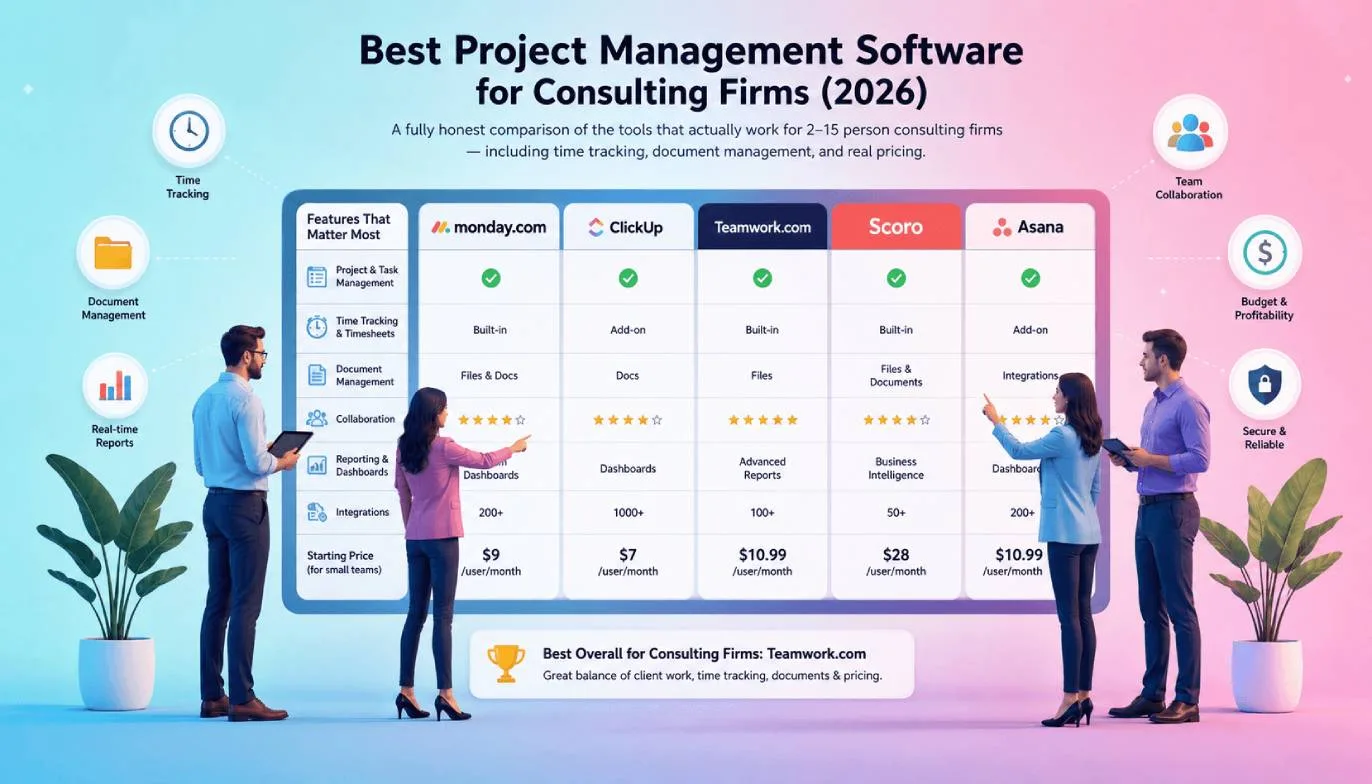
Asana vs Toggl vs Notion vs Siddhify: Full Feature Comparison
| Feature | Asana | Toggl | Notion | ⚡ Siddhify |
|---|---|---|---|---|
| Project management | ✓ | ✗ | Partial | ✓ |
| Task & subtask management | ✓ | ✗ | Partial | ✓ |
| Built-in time tracking | ✗ | ✓ | ✗ | ✓ |
| Time attached to tasks | ✗ | Add-on | ✗ | ✓ Native |
| Built-in invoicing | ✗ | ✗ | ✗ | ✓ |
| Client workspaces | Partial | ✗ | Partial | ✓ |
| Team / sub-user management | ✓ | ✓ | ✓ | ✓ |
| AI task automation | Limited | ✗ | Limited | ✓ |
| Goals & personal habits | ✗ | ✗ | Custom build | ✓ |
| Gamification / XP / streaks | ✗ | ✗ | ✗ | ✓ Unique |
| Net worth / finance tracking | ✗ | ✗ | Custom build | ✓ |
| Pomodoro / focus timer | ✗ | Partial | ✗ | ✓ |
| Monthly cost (5 people) | $55/mo | $50/mo | $80/mo | $49/mo total |
| Personal onboarding | ✗ | ✗ | ✗ | ✓ From founder |
How Siddhify Replaces All Three ⚡ Better Way
One platform that covers projects, time, billing, team, goals, and gamification — built for consulting firms of 2–15 people.
Replaces Asana
Full project and task management, Gantt/list/card views, team assignments, and sub-tasks — without the per-seat pricing that punishes growth.
Replaces Toggl
Time tracking is built directly into tasks. Start a task — time tracks automatically. No separate app, no forgotten timers, no reconciliation.
Replaces Notion
Client workspaces, team documentation, project briefs, and SOPs — all contextual to the projects and people they belong to.
Replaces FreshBooks
Built-in invoicing that pulls directly from logged hours. No reconciliation. Hours logged become invoices in seconds.
Gamification layer
XP points, streaks, Dream Score, and achievement badges make consistent work feel rewarding — the only platform in the market that does this.
AI automation
AI breaks down projects into tasks, suggests time estimates, flags scope creep, and drafts client status updates from your completions.
When the 3-Tool Stack Is Actually Right for You
To be fair — the Asana + Toggl + Notion stack isn't wrong for everyone. Here's when it genuinely makes sense to keep it:
- You have 20+ people and need enterprise-grade workflows, complex permissions, and dedicated ops staff to manage each tool.
- You have deep existing integrations with other enterprise systems that rely on these specific tools as data sources.
- Your team is already experts in all three tools and the switching cost would exceed the ongoing reconciliation cost.
- You need Notion for complex documentation beyond what a project-management-first tool provides.
For everyone else — freelancers, solopreneurs, and consulting firms under 15 people — the 3-tool stack is creating overhead that doesn't need to exist.
Related Reading
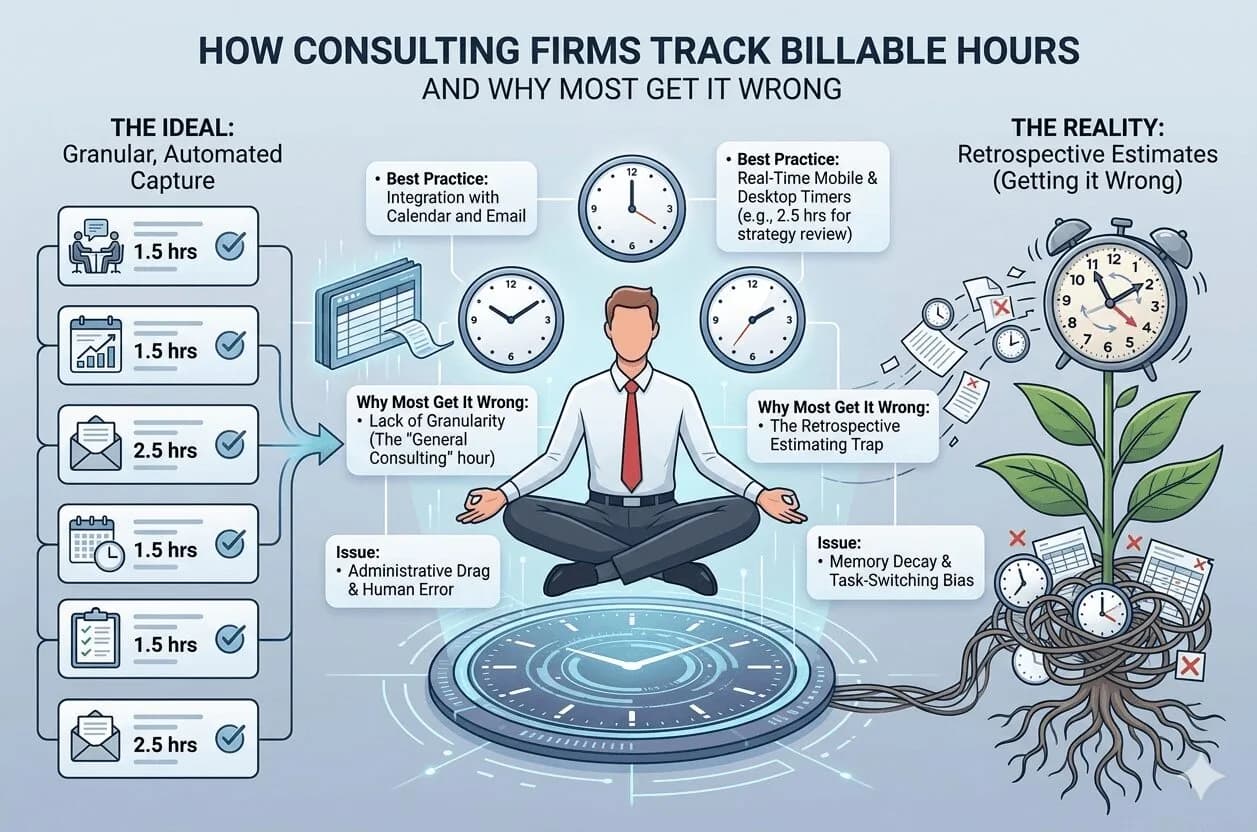
If you're also losing billable hours to poor time tracking, read our deep dive on how consulting firms track billable hours accurately. And if you're evaluating tools for your freelance practice specifically, see our guide to Siddhify for freelancers and consultants.
Frequently Asked Questions
Replace Three Tools With One — Starting Today
Siddhify brings projects, time tracking, invoicing, team management, and gamification into one platform built for consulting firms like yours.
⚡ Try Siddhify free — no credit card required