
Stay in the loop
Get the latest news, feature updates, and exclusive promotions.

Master resource scheduling in project management to boost productivity, reduce burnout, and meet deadlines. Learn more with Siddhify.

Do you often feel like your team is overworked, deadlines are slipping, and projects are spinning out of control? If so, you’re not alone. Many business owners and project managers struggle with poor resource scheduling, leading to wasted time, burnout, and missed goals.
According to the Project Management Institute (PMI), 43% of companies face project failures due to resource mismanagement. But with the right approach, you can avoid these pitfalls and maximize your team’s efficiency. Effective resource scheduling isn’t just about assigning tasks—it’s about ensuring the right people, tools, and materials are available at the right time. When done correctly, it enhances collaboration, streamlines operations, and ultimately boosts profitability.
In this guide, we’ll break down resource scheduling in project management—what it is, why it’s essential, common mistakes to avoid, and the best strategies for success. Plus, we’ll show you how tools like Siddhify can help simplify this crucial process. By the end of this article, you’ll have a complete roadmap to optimize your scheduling process and take your business productivity to the next level.
Resource scheduling is the process of assigning the right people, tools, and materials to projects at the right time. It ensures that teams work efficiently without overloading certain employees or leaving others with too little to do.
A well-structured resource schedule keeps projects on track, prevents burnout, and improves productivity. Without a clear resource schedule, projects can become chaotic, leading to inefficiencies and unnecessary costs. Companies that excel at resource scheduling often have a competitive advantage, as they can complete projects faster and at a lower cost than their competitors.

Make a list of everything your project needs—employees, software, budgets, and materials.
Use past project data to predict resource requirements. This helps avoid shortages or excess workload.
Spreadsheets won’t cut it. Modern tools like Siddhify offer real-time scheduling, automatic adjustments, and easy collaboration to keep your project running smoothly.
Resource planning isn’t a one-time task. Regularly review schedules and make changes when needed.
💡 Pro Tip: Overloading your best employees might seem like a smart move, but research shows that teams working at 85% capacity are the most efficient.
🚨 Spreadsheets Are Outdated – They don’t update in real-time, causing scheduling conflicts. While spreadsheets may work for small projects, they quickly become unmanageable as a business scales. They also lack automation, meaning managers spend too much time manually updating schedules.
🚨 Agile Doesn’t Always Mean “No Scheduling” – Some businesses assume Agile projects don’t need resource planning. This leads to chaos and last-minute crunch time. Even in Agile environments, resource scheduling is essential to ensure that workloads are distributed evenly and team members are not overburdened.
🚨 Automation Won’t Fix Everything – AI tools help, but without a solid strategy, they won’t solve poor planning. Businesses need to set clear resource allocation rules before implementing automation. Without a structured approach, automated tools may create more inefficiencies instead of solving them.
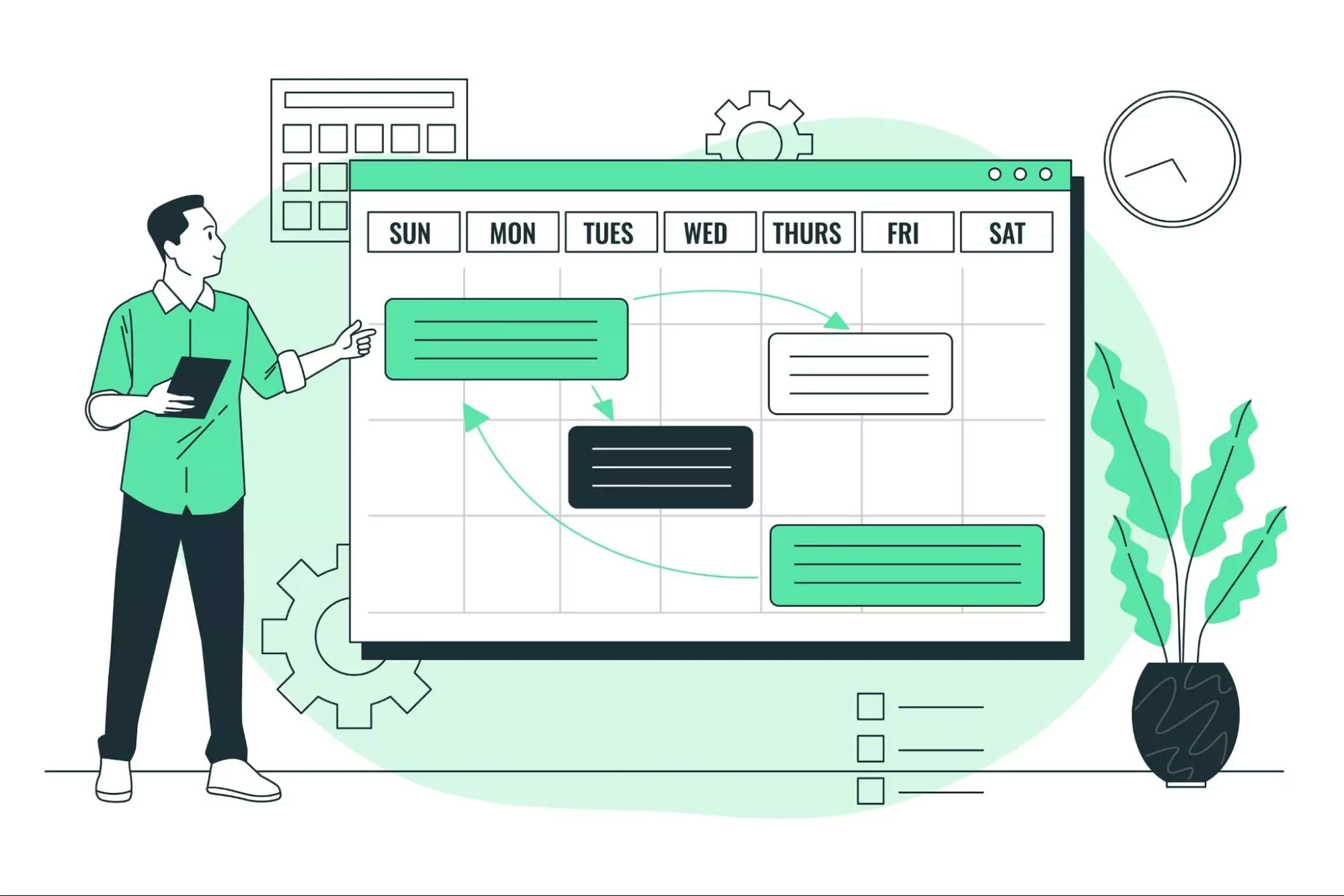
Many companies fail at resource scheduling because they rely on outdated or ineffective methods. Here are some major issues:
❌ Using Spreadsheets Instead of Proper Tools – Spreadsheets can’t track real-time changes, leading to scheduling conflicts.
❌ Overbooking Employees – Assigning too many tasks at once causes burnout and reduces work quality.
❌ Poor Communication – Team members don’t know what’s expected of them, leading to confusion and missed deadlines.
Without proper scheduling, projects run late, budgets spiral out of control, and team morale drops. Businesses that fail to prioritize resource scheduling often experience high employee turnover, as workers become frustrated with unclear expectations and unmanageable workloads. Implementing a structured scheduling system can prevent these problems and create a more productive work environment.
🚀 AI & Machine Learning: By 2030, 80% of businesses will use AI-driven scheduling. AI is revolutionizing project management by predicting workload distribution and optimizing schedules automatically. Companies that fail to adopt AI risk falling behind competitors who leverage data-driven resource planning.
🏡 Remote Work & Hybrid Teams: With more teams working remotely, scheduling tools must integrate time zone management and flexible work hours. Businesses that don’t adapt to remote work scheduling challenges may face collaboration bottlenecks. Ensuring seamless integration between scheduling tools and remote team workflows will be crucial for long-term success.
📊 Data-Driven Decision Making: Companies are using analytics to predict future resource needs more accurately. Decision-makers can now track productivity metrics and identify inefficiencies before they escalate. Businesses that utilize predictive analytics for resource scheduling will gain a strategic advantage in their industries.
With these trends, businesses must invest in smarter tools to stay ahead. Relying on manual scheduling processes or outdated methods will no longer be sustainable in a fast-paced, digital world.

✅ More Productivity: Teams work smarter, not harder.
✅ Less Stress & Burnout: Balanced workloads keep employees happy.
✅ On-Time Project Completion: Deadlines become easier to meet.
✅ Better Budget Management: Avoid unnecessary costs by properly planning resources.
Want to see how this works in real life?
A fast-growing tech startup was struggling with delayed launches. After switching from spreadsheets to a project management tool, they improved team coordination, cut overtime by 30%, and launched products 20% faster. This simple change saved them thousands of dollars and helped them scale their operations efficiently.
Proper resource scheduling doesn’t just impact one project—it has a ripple effect across the entire organization. When teams know their roles and responsibilities in advance, they can work more effectively, communicate better, and deliver higher-quality results.

Resource scheduling is the process of allocating people, time, and tools to projects efficiently. It helps businesses manage workloads, avoid burnout, and stay on budget.
Popular resource scheduling tools include Siddhify, ProjectManager.com, Teamwork, and Atlassian’s Jira. These tools help automate scheduling, manage workloads, and track resource availability in real-time.
Effective scheduling ensures that employees aren’t overworked, projects stay on track, and resources aren’t wasted. It improves team morale and efficiency.
Common challenges include poor forecasting, lack of real-time data, overbooking employees, and inefficient communication between teams.
Resource scheduling in project management isn’t just a nice-to-have—it’s essential for meeting deadlines, avoiding burnout, and maximizing efficiency. Businesses that invest in proper scheduling tools and techniques see higher profits, happier teams, and faster project completion.
If your team is still relying on spreadsheets or struggling with scheduling chaos, it’s time to switch to a smart solution like Siddhify. With its intuitive scheduling features and automation capabilities, you can streamline operations, optimize your resources, and scale your business with ease.
Start making smarter scheduling decisions today. Try Siddhify and see the difference for yourself!
Resource Scheduling in Project Management: The Key to Productivity & Growth
Join thousands of entrepreneurs and professionals managing their work and life in one place — with the motivational power of gamification built right in.
⚡ Try Siddhify Free TodayNo credit card required · Set up in minutes