
Stay in the loop
Get the latest news, feature updates, and exclusive promotions.
Learn the 7 best project management practices for entrepreneurs to streamline workflows, optimize time management, and achieve business success.
As an entrepreneur, you constantly juggle responsibilities, from strategy development to team management. However, one skill separates thriving businesses from struggling ones: effective project management. That is why the knowledge of project management best practices is mandatory for every business owner.
Statistics further highlight the vital importance of effective project management. According to the PMI (Project Management Institute), 11.4% of all project investment is wasted due to poor project management practices.
For startups and businesses, this inefficiency can be detrimental and is one of the significant factors contributing to the high failure rate among new companies (standing at 90% for startups).
Even if it does not lead to direct failure, poor planning, missed deadlines, and misaligned goals often prevent startups from realizing their potential.
To help you avoid common pitfalls of inadequate project management, this article will explore the best practices for streamlining workflows, managing time effectively, fostering team collaboration, enabling you to achieve consistent success.
Even though project management is complex and multi-faceted, clearly defined goals and schedules represent its foundation. This section will explore the best practices for efficient goal setting and scheduling in project management.
Efficient project management begins with setting clear and obtainable objectives. If the goals are not attainable, the project is unlikely to succeed. On the other hand, setting attainable objectives enables companies to design processes with the desired results in mind and adequately divide the tasks into manageable steps.
In addition to serving as a reference point, clearly defined goals enable efficient communication. They ensure that all key stakeholders know the potential results from the project’s outset. On the other hand, clearly defined project management goals ensure that team members are aligned and can make informed decisions.
Frameworks such as SMART (specific, measurable, achievable, relevant, and time-bound) should be used to anchor project planning.

To use the SMART framework in setting your goals, ensure that they are:
Relying on a goal-setting framework will not only simplify project management but also make business success more likely. According to Forbes, businesses with clear goals are 30% more likely to succeed. This phenomenon is not limited to businesses but is also observed in individual entrepreneurs. Namely, according to the Harvard Business Review, entrepreneurs who develop and write a formal plan are 16% more likely to succeed than those who do not.
It is often said that projects tend to require twice the time and budget initially anticipated. However, this should not be the case when project management best practices are used to mitigate this risk.
Robust resource forecasting and data-driven analysis can be used to estimate project timelines and costs more precisely. This ensures alignment with organizational goals and reduces the likelihood of costly overruns.
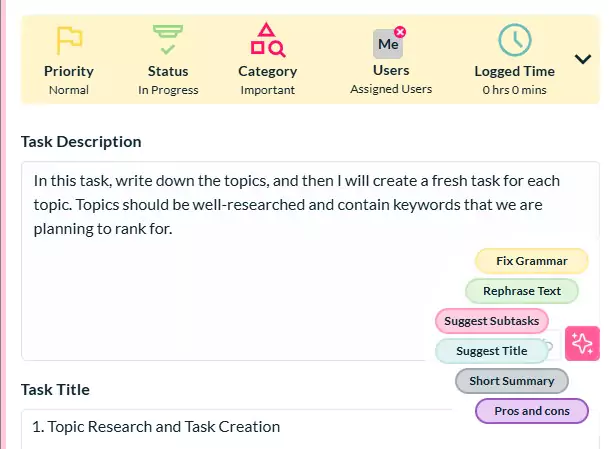
For example, our comprehensive project management tool, Siddhify, provides advanced AI assistance in addition to comprehensive project management features. Our proprietary AI assistant analyzes large quantities of data to ensure that no resource is underutilized and enables project managers to achieve objectives within the predicted time and budget.
A schedule-driven approach is one of the fundamental project management best practices. By setting clear timelines and adhering to them, teams create a structured framework that guides their actions and minimizes ambiguity. This approach ensures that each project phase moves forward methodically, reducing the risk of delays and avoiding the bottlenecks that often arise from poor time management.
This is vital, as missing deadlines affect a project’s timeline and can also derail momentum, harm team morale, and damage credibility with stakeholders. As such, businesses should ensure that their projects are schedule-driven and that the milestones are consistently met.
Actionable steps for schedule-driven project management include:
Efficient project management for small businesses and entrepreneurs relies on choosing the proper methodology and tools. This section will explore Agile project management best practices and evaluate the tools for streamlining the project workflow.

A methodology is a structured framework that guides how tasks and processes are carried out to achieve business goals. It provides a roadmap outlining the steps, tools, and principles needed to ensure consistency, efficiency, and quality in execution.
Although there is a wide variety of project management methodologies, with Agile and Waterfall being the most popular, Agile is shown to be more efficient in a fast-paced environment. Studies further prove this assumption- according to McKinsey & Company, Agile projects are 28% more successful than traditional ones.
Although Agile was initially developed for the software industry, it has proven to be effective across a wide range of industries. By focusing on iterative progress and continuous feedback, this methodology enables teams to deliver value incrementally while staying aligned with evolving priorities.
Instead of following a rigid, linear process, teams work in short cycles that usually last 2–4 weeks to deliver small but functional project increments. Each sprint is followed by an evaluation phase, allowing teams to refine their strategies based on feedback and shifting requirements.
This approach reduces waste, enhances flexibility, and improves overall project outcomes, making it ideal for dynamic environments such as start-ups and small to medium-sized businesses.
To implement Agile project management, you should:
As entrepreneurs must stay adaptable, implementing the Agile methodology is considered one of the project management best practices.

In addition to choosing the proper project management methodology and implementing it correctly, choosing the appropriate project management tools for entrepreneurs has a vital role. Namely, according to Statista, 65% of entrepreneurs and project managers believe using project management software positively impacts project timelines.
The right software can automate repetitive tasks, enhance workflow visibility, and significantly improve team collaboration. By leveraging these tools, CEOs and other executives can streamline operations, make data-driven decisions, and ensure deadlines are consistently met.
Project management tools also centralize data on all project-related information. This reduces the likelihood of miscommunication, keeps team members aligned, and allows real-time progress tracking.
Moreover, automation features eliminate manual task updates and free up time for strategic planning and other creative activities.
Siddhify, however, goes beyond mere task automatization and data centralization. Our cutting-edge AI assistant uses the centralized data to make informed suggestions on how to manage your team. In this way, Siddhify ensures that no team member is underutilized or overworked while taking each employee’s well-being into consideration.
Not all project management software is created equal, and not all tools will be adequate for your particular needs. As such, you should compare the features of different tools and evaluate which ones are the most adequate for your team.
Below are the most popular software choices, together with their unique functionalities:

After you have selected a tool, you should train all team members who will use it. Conduct training sessions to ensure your team understands how to use the tool to its full potential while focusing on features like task assignment, progress tracking, and integration options.
Finally, you should integrate the tool with your existing software stack, as seamless communication is essential for efficient project management. Integrate your project management software with tools like Slack or Microsoft Teams to enable instant updates and maintain clarity. These integrations ensure all stakeholders stay informed without requiring constant check-ins or follow-ups.
The best project management tools provide user-friendly and straightforward integration. For example, Siddhify can seamlessly integrate with your other tools while allowing for dozens of third-party integrations to make your overall project management more efficient and powerful.
Time management is an essential skill that enables entrepreneurs to accomplish their primary objectives on time while avoiding burnout. In this section, we will explore the two main components of time management: task prioritization and delegation.
According to the Pareto Principle, 80% of results come from 20% of efforts. Due to the often hectic nature of entrepreneurship, choosing the correct 20% of tasks to focus on can make a difference between timely project completion and missed deadlines.
Additionally, adequately prioritizing tasks promotes well-being and helps both employees and entrepreneurs avoid burnout.
The Eisenhower Matrix can help distinguish between urgent and important tasks. Also known as the Urgent-Important Matrix, this decision-making framework can help entrepreneurs prioritize tasks based on urgency and importance by encouraging individuals and teams to focus on activities that drive long-term success while minimizing time spent on low-value tasks.

The matrix divides tasks into four quadrants:
To prioritize tasks effectively, you should:
Efficient task delegation empowers teams and enables entrepreneurs to focus on strategic tasks. Apart from allowing uninterrupted focus on high-priority tasks, delegation also increases the efficiency of entrepreneurs and executives. Namely, according to Gallup reports, leaders who delegate are 33% more effective
To delegate responsibilities, you should:

A list of project management best practices would be incomplete without outlining the necessary tools that enable entrepreneurs to increase project efficiency. As such, this section will explore collaboration platforms and time-tracking tools.
Effective communication is crucial for efficient project management. However, communication breakdowns remain one of the primary reasons projects fail.
Platforms such as Microsoft Teams and Slack provide centralized hubs for communication, ensuring clarity and cohesion across teams. By streamlining the flow of information, these platforms enhance productivity and reduce misunderstandings. Research by Vorecol supports this claim, revealing that teams using collaboration platforms are 25% more productive compared to those relying on other communication methods
To properly use collaboration tools for project teams, you should:
To simplify integration, Siddhify provides combined communication functionalities and productivity tools. As such, our platform is an ideal solution for entrepreneurs and CEOs searching for an all-in-one solution.
Efficient project management requires more than just organizing tasks and requires understanding how time is allocated across various activities.
Time-tracking applications help entrepreneurs identify inefficiencies, optimize workflows, and promote team accountability.
Time management for entrepreneurs should be based on the following best practices:
To help entrepreneurs with project time management while also ensuring optimal productivity and well-being of all team members, Siddhify combines time tracking tools with advanced AI assistance. Our platform analyzes data in real-time to provide suggestions that ensure no team member is overwhelmed or underutilized.

Managing projects effectively is a critical skill for busy entrepreneurs juggling multiple responsibilities. Without a structured approach, it’s easy to lose focus, experience burnout, and derail progress. This section outlines practical methods to help leaders manage their workload, prioritize tasks, and foster accountability within their teams.
To minimize decision fatigue and avoid burnout, entrepreneurs should create a routine that prioritizes tasks optimally and ensures efficiency.
Tasks should be divided according to urgency, priority, and resource intensive. To do so, we advise relying on a decision-making framework, such as the Eisenhower Matrix we have outlined in section 3.
To develop a structured routine, divide the tasks in the following way:
Project reviews are essential for ensuring goal alignment and identifying improvement opportunities. Regular assessments allow entrepreneurs to monitor progress, address challenges proactively, and make informed adjustments to strategies, ensuring the project stays on course.
Frequent reviews provide a structured way to measure performance against key objectives. They also foster transparency, accountability, and collaboration within and ensure everyone is aligned and working efficiently toward shared goals.
To conduct reviews efficiently, you should:
By incorporating consistent project reviews into your workflow, you can maintain momentum, ensure alignment with your goals, and foster a culture of incremental improvement within your team. This, in turn, can drastically improve your business results as, according to the Project Management Institute, projects with clearly defined KPIs and regular reviews are 25% more likely to be successful and deliver the intended benefits.

Creating a harmonious collective and promoting open communication is the foundation of long-term success. In this section, we will outline the best practices for building a cohesive team and fostering open communication.
Transparent communication is essential for building trust, reducing misunderstandings, and ensuring that teams stay aligned with project goals.
Effective communication helps prevent the creation of silos, where team members work in isolation, and promotes a culture of collaboration where information flows freely.
This open communication culture leads to better problem-solving and decision-making, ensuring that challenges are addressed promptly and that all team members feel heard and valued.
To promote transparent team communication, you should:
A strong culture plays a vital role in motivating team members and fostering collaboration. When team members feel connected to the organization’s values and mission, they are more likely to take ownership and contribute actively to achieving project goals.
A positive and supportive culture enhances communication, strengthens relationships, and boosts morale, which leads to improved performance and productivity.
To build a cohesive team culture, you should:
Avoiding common mistakes is as important as implementing project management best practices. In this section, we will explore two of the most common project management mistakes to help entrepreneurs to avoid them.
Not anticipating the potential risks can lead to costly delays, project failures, or unforeseen setbacks.
Effective risk management allows project managers to identify potential problems before they arise, prepare for them, and mitigate their impact. By proactively addressing risks, teams can stay on track and avoid disruptions that can derail progress.
To implement effective risk management, you should:

Micromanagement is a common issue in project management that can impact both team morale and productivity.
When entrepreneurs excessively monitor each task rather than focusing on what needs to be achieved, they risk negatively affecting creativity, autonomy, and innovation.
Micromanaged employees may feel distrusted, demoralized, and less motivated, which results in decreased efficiency and higher turnover rates. Instead, a more empowering approach that focuses on outcomes rather than processes creates a more productive and engaged environment.
To avoid micromanagement, you should:
Avoiding micromanagement and implementing project management best practices that empower teams not only create a healthier work environment but also increase productivity. According to Forbes, teams in which employees feel empowered are 23% more productive.
This article has explored project management best practices to help entrepreneurs increase efficiency and improve performance.
Our key takeaways include:
7 Project Management Best Practices for Entrepreneurs
Join thousands of entrepreneurs and professionals managing their work and life in one place — with the motivational power of gamification built right in.
⚡ Try Siddhify Free TodayNo credit card required · Set up in minutes